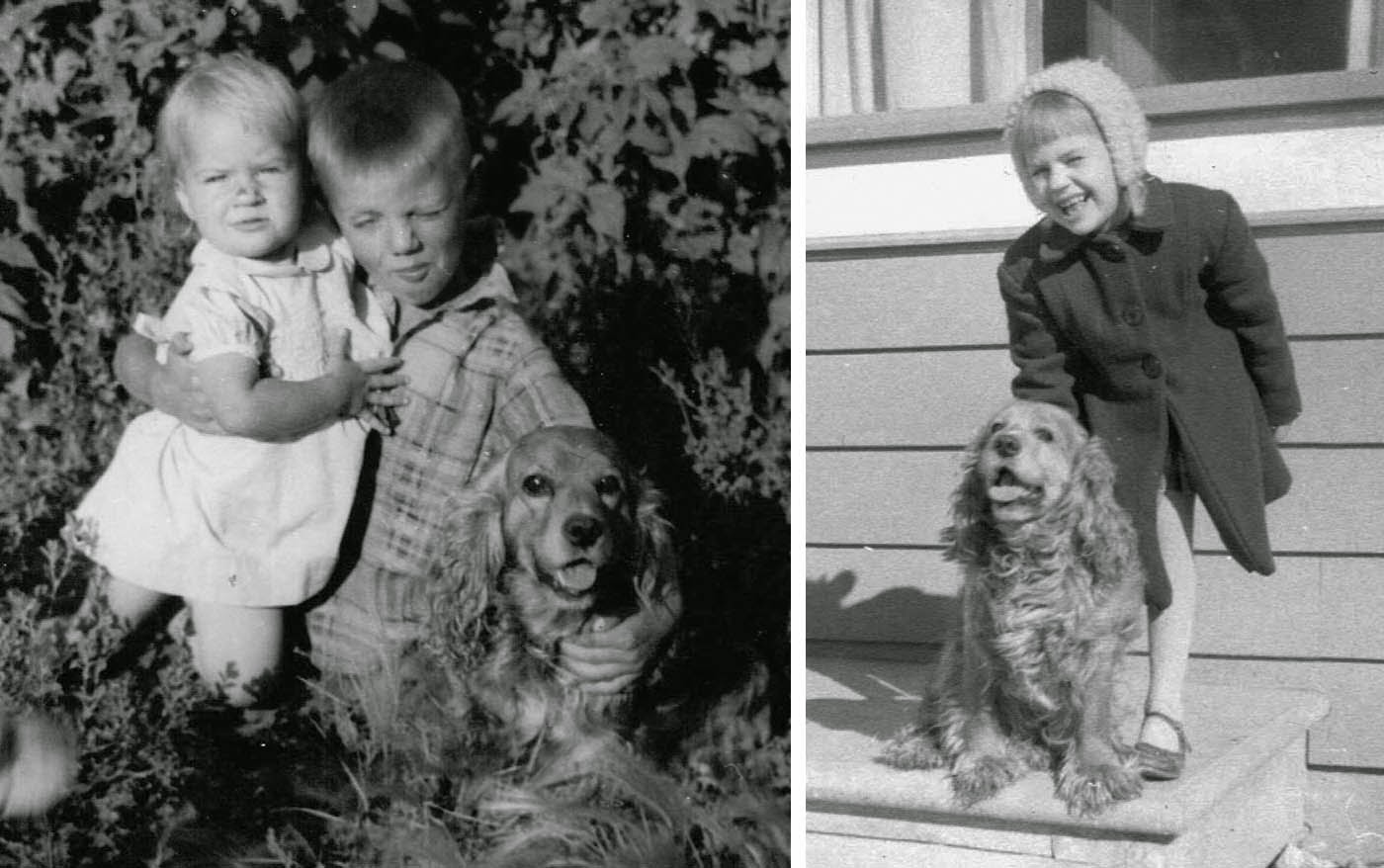
My
father’s extended family was very close. Twelve cousins, born within 11 years
of each other, grew up together. They played with each other, at least in
groups of similar ages. They went to school in the same country classrooms,
again for the most part. One of each of their parents were siblings, all of
whom had arrived in Alberta together around 1910-11. Two other cousins were
born much later, one in 1925 and one in 1935. While much loved, they were not
as close as those first dozen.
My great-grandparents,
Newton and Margaret Thompson, had six children together between 1885 and 1902.
Margaret had another daughter from a first marriage. All the children were born
in North Dakota. Two infants died, one in 1892 and one in 1902. The rest grew
up in a very close family. The oldest three married in North Dakota, the
youngest two in Alberta.
 |
Children
of Newton and Margaret Thompson – left to right: Mae, Maud, Carrie, Charlie,
Ethel – ca 1925
When Newton and Margaret Thompson decided, in 1909, to come to
Canada, to take advantage of the homesteading opportunities, all of their
children were on board with the idea as well. He bought two sections of land
from the Canadian Pacific Railway near Keoma, Alberta. Charlie, Carrie and Mae
came up with Margaret in 1910. Maud and Ethel followed, with their new
husbands, by 1911. All the families participated in farming of the original two
sections of land, later acquiring other close-by farms in the area where they
raised their families.
Isaac
Newton Thompson (1859-1937) & Margaret Mary Anderson (1857-1919)
|
|||||
The
Children
|
Mary
Maud
(1882-1960)
|
Charlie
(1885-1929)
|
Alice
Ethel
(1887-1959)
|
Carrie
Jane
(1889-1959)
|
Elizabeth
Mae
(1898-1985)
|
The
Cousins
|
Margaret
Carrie (1909-1933)
|
Isaac
Charles (1912-1974)
|
Lloyd
Willis (1912-1974)
|
William
Calvin (1914-1983)
|
Robert
Newton (1919-1967)
|
Elizabeth
Victoria
(1912-1947)
|
Irven
Palmer (1913-2000)
|
Hazel
Jean (1916-2011)
|
Edward
Newton
(1916-1997)
|
||
Albert
Lester (1916-1999)
|
Bernice
Margaret
(1918-1998)
|
Marion
Elizabeth (1919-1919)
|
|||
Mary
May
(1920-2012
|
Evelyn
Ethel (1926-1926)
|
||||
Gladys
(1925-2014)
|
Ethel
Mae
(1935- )
|
||||
Two
children of Newton and Margaret died as infants: Florence (1892) and
Eveline (1902)
Growing
up I always knew my dad had these cousins, but I really never figured out their
real relationships and how close they all were to each other, until I started
on my own family history research journey.
The
families all lived very close to each other in the Keoma-Irricana-Kathyrn (KIK)
area so there were ample opportunities for them to socialize and for their
children to get to know each other well. And they did that whenever possible.
Grandma and Grandpa Thompson were their to oversee the little ones on many occasions,
living as they did, near the centre of their children’s farms.
 |
Grandma
Margaret Thompson with Lloyd and Ike at the Thompson Keoma house in 1913
 |
Margaret
(back), Lloyd, Ike and Elizabeth at the Thompson Keoma house in 1913
|
As
I indicated, the cousins grew up together – played together, went to school
together, visited with each other at family gatherings, attended community
social events together – in other words, became close friends. Hazel, one of my
father’s cousins, actually introduced him to my mother. And another cousin, Albert,
was the best man at their wedding. Mom's maid of honour, Virginia, was the wife of Dad’s
brother. I believe that every cousin who still lived in the KIK area, as well
as a few who travelled from elsewhere, was at their wedding and can be seen in
the wedding party photograph I published in my blog
post of October 7, 2014. I might have a difficult time actually pointing each of them out, though.
 |
Eight
cousins at a family gatherings in 1926 – left to right: Bill, Irven,
Ted, Lloyd, Elizabeth, Bernice, Ike and Hazel
I
think that the KIK community in which the cousins grew up might have been much
like the old parishes in Devon, England where my Shepheard ancestors lived. The
church(es) were central to the social events; family interactions were common
and important; cousins grew up together and knew each other well. I even have
one example of first cousins marrying each other – John Shepheard and Jane
Treby Shepheard tied the knot in 1791, in Cornwood parish, Devon.
Almost
all of that group of cousins are gone now. We remember them through recorded stories
and photographs. The generation following did not have the opportunity or
luxury of getting to know their cousins quite as well. As with many
communities, after the children grew up they went their separate ways, many
moving to faraway places. Rarely did they ever get a chance to get together as
a group without travelling some distance.
 |
Children, with spouses, and grandchildren of Jimmy and Carrie Shepheard at Campbell River,
British Columbia in 1956
Cousins
of my generation are only occasionally in contact with each other. Time and
space have more or less permanently separated us. Among the next generation, there
is even more distance. The opportunities to visit even their
first cousins, let alone participate in broader family events, practically never present themselves.
 |
Children, with spouses, and grandchildren of Bill and Norma Shepheard gathered in Sherwood Park, Alberta
in 1981
We take those kinds of visits for granted now but they were, and are still an important part of growing up and being reminded of who you are and where you come from.
Wayne
Shepheard is a volunteer with the Online Parish Clerk program in
England, handling four parishes in Devon, England. He has
published a number of articles about various aspects of genealogy and is a past
Editor of Chinook, the quarterly
journal of the Alberta Family Histories Society. Wayne also provides
genealogical consulting services through his business, Family History Facilitated